Between 80 and 90 percent of women have cellulite, which makes dimpled skin on the thighs and hips one of the most ordinary anatomical traits in human biology. Yet the beauty industry continues to treat it like a temporary design flaw that can be erased with the right purchase.
Anyone looking into professional solutions quickly runs into a dizzying menu of clinic treatments. Options range from four-figure surgical releases with significant recovery periods to series of sound-wave pulses and heating sessions.
Separating genuine clinical mechanics from clinic brochures helps you understand what each intervention does, what it costs, and how home technology fits into long-term skin health.
The anatomy behind the dimple
To evaluate any cellulite treatment, you have to look past the surface. Cellulite is not just stubborn fat; it is a structural pattern created by the way female connective tissue is organized.
Beneath your skin sits a network of vertical fibrous bands called septae. These bands act like biological anchor cables, connecting your dermis to the underlying muscle layer. Fat lobes sit in compartments between these vertical cords.
When fat cells press upward and the rigid vertical bands pull downward, the surface puckers into dimples. Think of an upholstered armchair: the button pulls the fabric down while the cushion pushes up around it.
Because the architecture lives four to eight millimeters beneath the surface, topical lotions and body scrubs cannot alter the underlying shape. Real change requires working on the structural cords, the volume of the fat compartments, or the thickness of the skin layer resting on top.
Subcision: cutting the interior cords
Subcision is the most direct mechanical intervention available for cellulite. Performed in a medical clinic under local anesthesia (often under brand names like Cellfina), a physician inserts a tiny motorized micro-blade beneath the skin to physically sever the tight vertical septae.
Returning to the upholstered armchair analogy, subcision snips the thread holding the button down. Once that downward tension releases, the skin surface bounces back up to a smooth, flat position.
-
What it treats: Deep, distinct, isolated "craters" that remain visible whether you are standing or lying down.
-
The downtime: Expect noticeable bruising and swelling that takes two to three weeks to fade, along with wearing compression garments for several days.
-
The cost: Typically ranges from $2,500 to $5,000 or more, depending on the number of dimples treated.
-
The limitation: While severed bands rarely reattach, subcision does not address overall skin laxity, ripples, or general skin texture.
Acoustic wave therapy: shaking the tissue awake
Acoustic wave therapy, sometimes called shockwave therapy, takes a completely non-invasive approach. Instead of cutting tissue, a specialized handpiece delivers rapid acoustic pressure pulses into the skin.
These high-frequency sound waves travel through the tissue, creating mechanical vibrations that stimulate microcirculation and encourage local metabolic activity. Over time, repeated pulses help soften stiff, fibrotic bands and encourage tissue elasticity.
-
What it treats: Mild to moderate textural dimpling, wavy skin patterns, and localized fluid retention.
-
The downtime: Zero recovery time. Skin may look slightly pink for an hour or two, but you can head straight back to normal activities.
-
The cost: Sessions are sold in packages of 6 to 12 visits, usually totaling between $1,500 and $3,500.
-
The limitation: Results build slowly and require ongoing maintenance sessions every few months, making it an ongoing financial commitment.
In-clinic radiofrequency: deep bulk heating
Professional radiofrequency systems in dermatology practices use high electrical power to deliver deep thermal energy into the dermal and subcutaneous layers.
By heating tissue to therapeutic temperatures, clinical radiofrequency causes immediate contraction of collagen fibers while triggering fresh collagen production over the following months. Think of this approach as thickening the mattress topper: instead of cutting the buttons underneath, you make the covering layer thicker and sturdier so the internal structure underneath does not show through.
-
What it treats: Generalized skin looseness, wavy rippling, and thinning skin on the thighs and buttocks.
-
The downtime: Minimal downtime. Patients experience warmth and moderate redness that clears within a few hours.
-
The cost: A standard four-to-six session clinic protocol generally runs between $2,000 and $4,000.
-
The limitation: Clinical heating provides a strong initial collagen stimulus, but natural collagen breakdown continues with age. Without ongoing maintenance, improvements gradually diminish over 6 to 12 months.
The at-home equation: the weekly maintenance reality

Understanding the physics of professional radiofrequency explains where at-home devices belong in your routine.
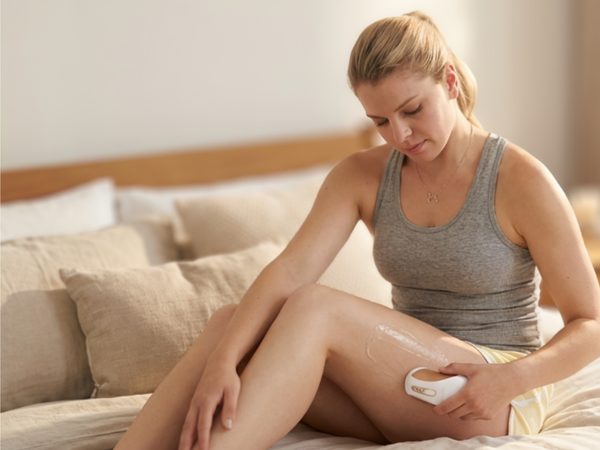
Home radiofrequency devices use the exact same electrical heating principles as clinic systems, but with lower energy output per pass. Because home tools are designed for personal use, they replace the intense single-visit thermal blast with gradual, weekly sessions you perform on your own schedule.
Rather than spending thousands on recurring clinic packages to maintain dermal density, consistent at-home sessions provide the regular collagen stimulation needed to keep the skin matrix thick and resilient. It is the difference between hiring a personal trainer for an intensive monthly workout and keeping up a steady weekly fitness routine at home.
-
What it treats: Widespread textural waviness, mild-to-moderate dimpling, and loss of dermal firmness across the thighs, buttocks, and abdomen.
-
The downtime: Zero recovery time. Treated skin displays a healthy rosy flush that settles within 30 to 60 minutes.
-
The cost: A one-time device investment of $350 to $600, plus occasional conductive gel refills (around $25 to $35).
-
The limitation: Demands personal consistency. Because energy levels are calibrated for safe unsupervised use, visible smoothing takes 8 to 12 weekly sessions rather than an immediate clinic turnaround.
For women exploring at-home body skin tightening tools, home radiofrequency works as an accessible, sustainable foundation for smoothing skin texture over time.
Matching the modality to your goals
Choosing a path comes down to understanding your specific anatomical pattern and budget:
-
Isolated deep craters: If your primary concern is a handful of distinct, shadow-casting dimples, a surgical consultation for in-clinic subcision delivers the most targeted structural release.
-
Widespread textural rippling and laxity: If you are noticing broad wavy texture and loss of skin elasticity across your thighs or glutes, collagen-stimulating radiofrequency is the appropriate tool.
-
Long-term budget and convenience: If ongoing multi-thousand-dollar clinic visits do not fit your lifestyle, a dedicated at-home radiofrequency routine offers a practical way to support dermal thickness on your own terms.